
 Fineray Lanka Tours
Pearl of the Indian Ocean
- Home
- Tour Packages ▾ 🍃5 Days — Kandy, Nuwara Eliya & Bentota 🏙️6 Days — Kandy, Nuwara Eliya, Bentota & Colombo 🏛️7 Days — Heritage, Hill Country & Beach 🪷8 Days — Sigiriya, Kandy, Ella, Bentota & Colombo ✨9 Days — Premium Sigiriya, Kandy, Ella & Bentota 🚁10 Days — Sigiriya, Ella, Haputale & Bentota 🐆11 Days — Sigiriya, Kandy, Ella, Yala & Bentota 👑14 Days — Ancient Kingdoms, Highlands, Yala & Galle 🗺️View All Tour Packages
- Destinations
- Gallery
- About
- Contact
The Kandy to Ella Train: Everything You Need to Know
Last updated: September 2026.
The Kandy-to-Ella train is often called one of the world’s most scenic rail journeys, and it earns that reputation honestly: tea estates, misty ridgelines, and the Nine Arch Bridge, all from a carriage window. It’s also the single most bottlenecked leg of a Sri Lanka itinerary if you don’t plan around it. Here’s how the route actually works, what it costs, and how to book it without stress.
Quick summary
- Distance: about 166 km, Kandy to Ella.
- Journey time: 6-7 hours for the full route once the Kandy section reopens.
- Most scenic stretch: Nanu Oya (for Nuwara Eliya) to Ella, about 2.5 hours. This is the only part running in September 2026.
- Book ahead: 1st and 2nd class reserved seats sell out weeks ahead in December-to-March peak season.
- Part of the line remains under repair after Cyclone Ditwah; check Sri Lanka Railways before building a day around it.
Line status, September 2026
- Kandy to Nanu Oya: closed since Cyclone Ditwah in November 2025. No train currently runs from Kandy to Ella.
- Nanu Oya to Ella and Badulla: running again since 20 June 2026, on a special timetable.
- How to do the trip now: drive from Kandy to Nanu Oya (about 2.5 to 3 hours via Ramboda), then take the train from Nanu Oya to Ella (about 2.5 hours). This is the most scenic part of the line.
- Watch out: some booking sites still sell “Kandy to Ella” tickets. Check that your ticket starts at Nanu Oya.
Table of contents
- Timetable (September 2026)
- Route overview
- Which trains run this route
- What to expect on board
- The most scenic sections
- Doing just the scenic stretch
- Nine Arch Bridge viewpoint hike
- Photography and phone tips
- Classes and how to book
- Cost breakdown
- Best time to ride
- What to pack for the ride
- If the train is sold out or disrupted
- How this fits into a longer itinerary
- Common mistakes
- Frequently asked questions
Kandy to Ella train timetable (September 2026)
While the Kandy section is closed, trains on this route start and end at Nanu Oya. Sri Lanka Railways runs the reopened section on a special timetable, and these are the departures travellers reported in September 2026:
| Direction | Departs | Arrives (approx.) |
|---|---|---|
| Nanu Oya to Ella | about 9:00 am | about 11:30 am |
| Nanu Oya to Ella | about 2:30 pm | about 5:00 pm |
| Ella to Nanu Oya | about 9:50 am | about 12:15 pm |
| Ella to Nanu Oya | about 3:50 pm | about 6:15 pm |
Times on the reopened section can change at short notice while repairs continue, and trains often run 15 to 30 minutes late. Confirm the day’s times with Sri Lanka Railways, at the station, or through your driver before you plan around a departure. The morning train gets the best light and the clearest views.
The Colombo to Kandy line is also still closed beyond Rambukkana. The Railway Department’s chief engineer said in September 2026 that Colombo to Kandy services should resume around October 2026, but no timetable has been published yet.
Route overview
The line covers about 166 km between Kandy and Ella, climbing from Kandy’s roughly 500-meter elevation up past 1,800 meters near Nanu Oya before descending again toward Ella. Key stops along the way include Peradeniya, Hatton (the access point for Adam’s Peak), Nanu Oya (the station for Nuwara Eliya, a further 30-minute drive from the platform), Haputale, and Ella itself. The full run takes 6-7 hours, though delays are common enough that padding an extra hour into your plans is realistic rather than pessimistic. The climb from Kandy to the highest point near Pattipola, Sri Lanka’s highest railway station, gains well over 1,300 meters of elevation across the route.
Which trains run this route
Several named intercity services cover this line as part of the longer Colombo-to-Badulla route, including the Podi Menike and Udarata Menike. These aren’t separate booking categories from “the Kandy-Ella train” generally; they’re simply which specific train you end up on depending on departure time. An overnight service, sometimes called the Night Mail, also runs this route with sleeper berths, though it’s used more by budget backpackers than by most first-time visitors.
What to expect on board
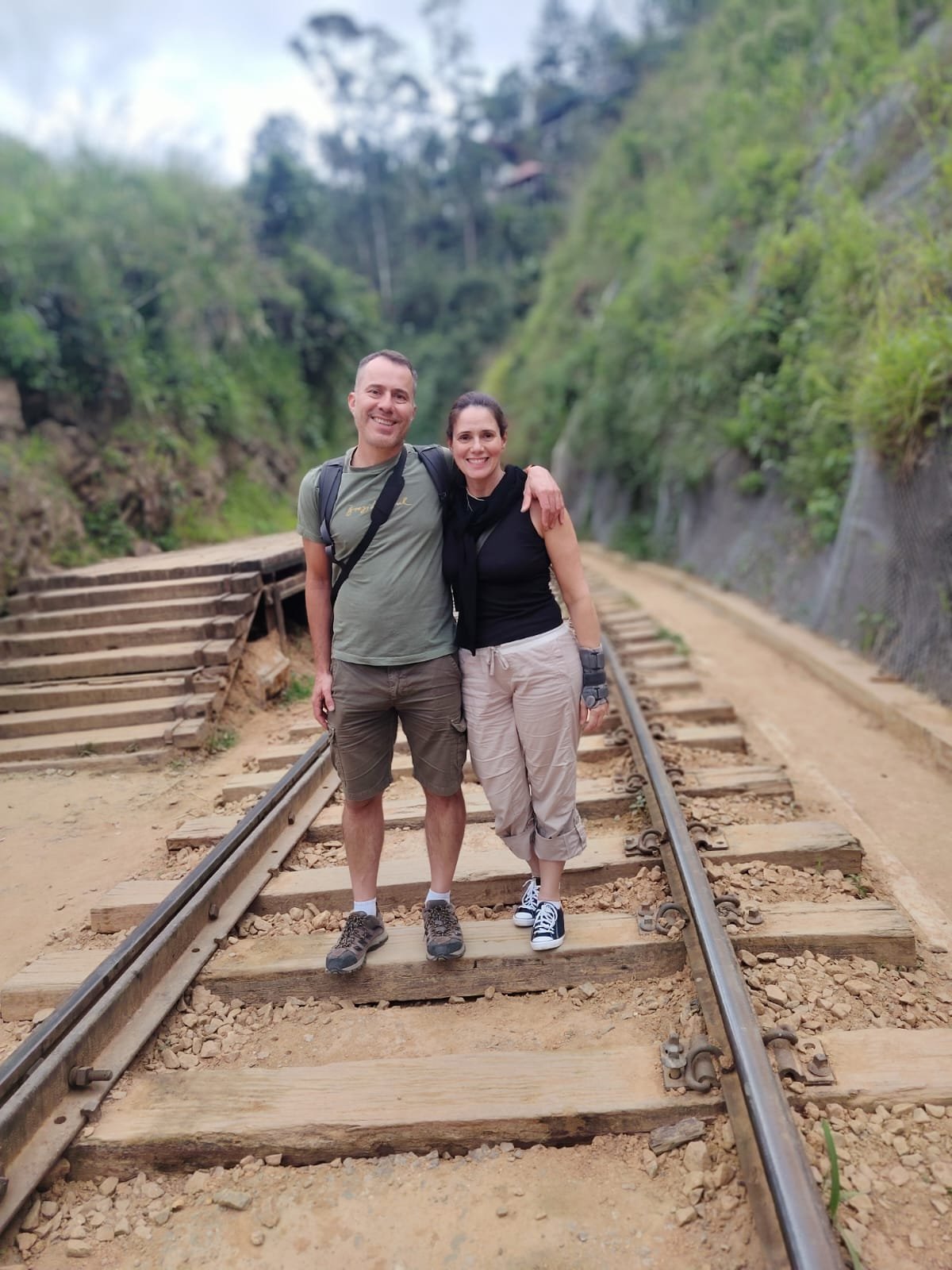
The train itself is basic rather than luxurious, even in first class. What you’re paying for is the seat and the view, not creature comforts. Doors are often left open between carriages, which is part of the appeal (and the reason to keep a firm grip on cameras and phones near open doorways) but also means the ride can get chilly once you’re above 1,500 meters.
Vendors walk the aisles selling snacks, tea, and drinks throughout the journey. Toilets exist on board but are basic; most travelers plan around station stops rather than relying on them. Conductors walk through periodically checking tickets and can usually help settle a seating mix-up, though language can be a barrier outside the main tourist-facing services.
The most scenic sections
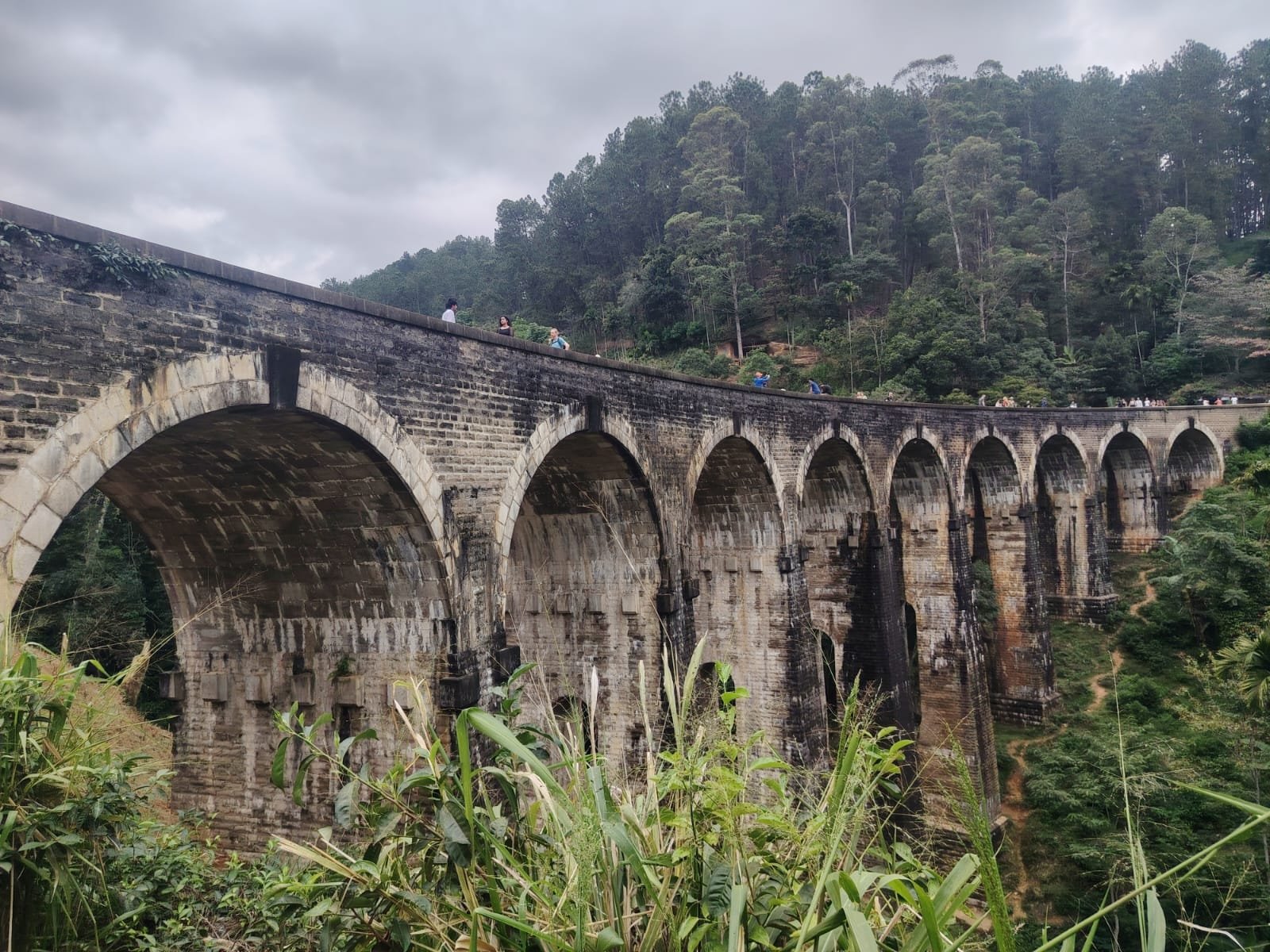
Tea estates start appearing not long after Kandy, but the landscape becomes genuinely dramatic past Hatton, where the line climbs through terraced tea gardens and eucalyptus forest with sweeping valley views. The final approach into Ella crosses the Nine Arch Bridge, a colonial-era viaduct that’s become one of the most photographed spots in Sri Lanka; the train slows noticeably here, giving passengers a proper look rather than a blur.
Seats on the side facing the valley get the better views for most of the climb, though which side that is varies by specific carriage and direction, so ask staff or a fellow passenger once you’re seated rather than assuming.
Doing just the scenic stretch
The full 6-7 hour Kandy-to-Ella ride isn’t required to see the highlights. Many travelers instead join the train at Nanu Oya (after visiting Nuwara Eliya) or Hatton, covering only the most scenic 3-3.5 hour stretch into Ella. This cuts the total time commitment roughly in half while keeping the parts of the ride most people actually came for, and it fits more naturally into an itinerary that already has you staying in the hill country before Ella. Nanu Oya station itself sits a 30-minute taxi ride from Nuwara Eliya town, so factor that transfer into your timing on both ends if you’re starting or ending the scenic stretch there rather than passing straight through.
Nine Arch Bridge: the viewpoint hike
Beyond the view from the train itself, the Nine Arch Bridge has become a destination in its own right. A short walking trail from Ella town, roughly 20-30 minutes on foot, leads to viewpoints below and beside the bridge where you can watch trains cross from ground level rather than from inside a carriage.
Several small cafes near the trailhead serve breakfast or coffee with a bridge view, and it’s common to time a visit around a scheduled train crossing rather than showing up at random. Local guesthouses and drivers usually know the day’s approximate crossing times.
Photography and phone tips
The best light for photos falls in the early morning and late afternoon, when the sun angles across the tea terraces rather than sitting directly overhead. Shooting from an open doorway gives an unobstructed shot but means holding on with one hand; a wrist strap for your phone or camera is a small precaution worth taking.
Battery life drains faster than expected on a 6-7 hour ride with photos and video running throughout, so carry a power bank if you’re documenting the whole journey rather than just the Nine Arch Bridge stretch.
Classes and how to book
Three classes are available. First-class observation cars have air conditioning, large windows, and assigned seats, and are the most in-demand by far. Second class is reserved seating without the observation-car upgrades. Third class is unreserved: cheap and often standing-room-only in peak season, but boardable without advance planning.
Book first and second class through Sri Lanka Railways directly, or through a travel agent who can secure seats as part of a broader itinerary. Reservations open 30 days ahead and the popular segments sell out within hours during December-to-March peak season. Third-class tickets are bought same-day at the station. Third-party sites like 12Go handle the booking process in English with instant confirmation, useful if the official portal’s interface is giving you trouble, though expect a small service markup over the official fare.
Cost breakdown
- First-class observation: roughly $8-15 depending on the specific service and route length.
- Second-class reserved: roughly $3-6.
- Third-class unreserved: under $2.
These are official fares; third-party booking sites often add a markup on top for the convenience of guaranteed online booking.
Best time to ride
December to March offers the clearest views and the driest conditions in the hill country, but it’s also when seats sell out fastest. Traveling outside peak season trades a slightly higher chance of low cloud or light rain for a much easier booking process. Either way, mornings tend to have clearer visibility than afternoons, when cloud cover often builds over the hills. See the full month-by-month weather guide for how this lines up with the rest of a trip.
What to pack for the ride
Temperatures drop noticeably above 1,500 meters, especially with train doors left open. A light jacket or fleece is worth keeping in your daypack rather than checked luggage. Bring snacks and water, since onboard vendors sell out of popular items on busy runs, and keep valuables zipped away rather than loose near open doorways. See the complete packing list by season for the rest of what to bring.
If the train is sold out or disrupted
Part of the Kandy-to-Ella line remains under repair following Cyclone Ditwah, and service on affected sections isn’t guaranteed even outside that specific issue. Check Sri Lanka Railways for current status before locking in a date around this leg specifically.
If seats are sold out or the line is disrupted, a private car covers the same route in roughly 3-4 hours instead of 6-7, trading the train experience for reliability. Most travelers who can’t get train seats simply drive this leg and take the train on a different, shorter segment instead, such as Nanu Oya to Ella.
How this fits into a longer itinerary
This train ride anchors the hill-country middle section of most Sri Lanka itineraries. It appears as a highlight in our 7-day itinerary and in longer routes like the 10-day Sigiriya, Ella, Haputale and Bentota tour and the 11-day Sigiriya, Kandy, Ella, Yala and Bentota tour, both of which build in the Nanu Oya-to-Ella scenic stretch with a private driver handling the rest of the route. See the full guide to trip length if you’re still deciding how many days to allocate to the hill country.
Common mistakes
Booking the full Kandy-to-Ella ride without realizing it’s 6-7 hours, then arriving in Ella too tired to enjoy the evening. The shorter Nanu Oya-to-Ella segment covers the same highlights in about half the time.
Waiting until arrival in Sri Lanka to book first or second class in peak season, then finding only third-class unreserved tickets left.
Assuming the train is guaranteed to run on schedule. Build a buffer day around this leg rather than a same-day onward flight or tight connection.
Forgetting the Nanu Oya-to-Nuwara Eliya taxi transfer when joining the scenic stretch partway through. It’s a short ride, but it isn’t automatic, and taxis can be scarce right when a train pulls in.
Frequently asked questions
How long is the Kandy to Ella train ride?
The full route takes 6-7 hours. The shorter, most scenic Nanu Oya-to-Ella segment takes roughly 3-3.5 hours.
Do I need to book the Kandy to Ella train in advance?
Yes, for first and second class, especially December to March. Reservations open 30 days ahead and popular segments sell out within hours.
Which side of the train has the best views?
It varies by carriage and direction, so ask staff once you’re seated rather than assuming a fixed rule.
Is the Kandy to Ella train running right now?
Only part of it. The Kandy to Nanu Oya section has been closed since Cyclone Ditwah in November 2025. Trains between Nanu Oya and Ella have run again since 20 June 2026, so the usual plan now is to drive from Kandy to Nanu Oya and take the train from there. Check Sri Lanka Railways for the latest status before booking.
What time does the train leave Nanu Oya for Ella?
In September 2026, departures were reported at about 9:00 am and 2:30 pm, arriving in Ella about 2.5 hours later. The reopened section runs on a special timetable, so confirm times at the station or with Sri Lanka Railways.
Can I just do part of the Kandy to Ella route?
Yes. Many travelers join at Nanu Oya or Hatton and ride only the most scenic stretch into Ella, cutting total time roughly in half.
What’s the alternative if I can’t get train tickets?
A private car covers the same route in 3-4 hours. Most travelers who miss out on seats drive this leg and take the train on a shorter, easier-to-book segment instead.
Can I hike to the Nine Arch Bridge instead of just seeing it from the train?
Yes. A short trail from Ella town, about 20-30 minutes on foot, reaches viewpoints below and beside the bridge for a ground-level look at trains crossing.
Should I book the Kandy to Ella train through a third-party site?
The official Sri Lanka Railways site is cheapest. Third-party sites like 12Go add a markup but offer an easier English-language booking process.
Our 10-day and 11-day tours both build this train ride in with a private driver covering the rest of the route, so you get the scenery without the logistics. See the complete Sri Lanka travel guide for the rest of the planning picture.
